


 Settings
 Gift Card
 Blog
Blog Locate Us
 Partnership

Food Plating Techniques That Make Every Dish Look Restaurant-Worthy
TL;DR
- Food presentation directly influences how a dish is perceived and tasted, not just how it looks
- Five tools cover 90% of professional plating needs at home
- Negative space, height variation, and sauce placement are the three techniques with the highest visual impact
- Professional chefs approach plating as the final step of cooking, not a decorative afterthought
- A private chef brings restaurant-level presentation standards directly to your table at home
Food plating is the deliberate arrangement of a dish on the plate to enhance its visual appeal, communicate the quality of the ingredients, and shape the overall dining experience.
A well-plated dish uses composition, color, and spacing to guide the guest’s eye before the first bite is taken.
Professional chefs across fine dining, private chef services, and catering treat plating as the final act of cooking. Every component placed on the plate, from the position of a protein to where a sauce lands, is a decision made in service of how the dish will be received.
Why Food Presentation Changes the Dining Experience
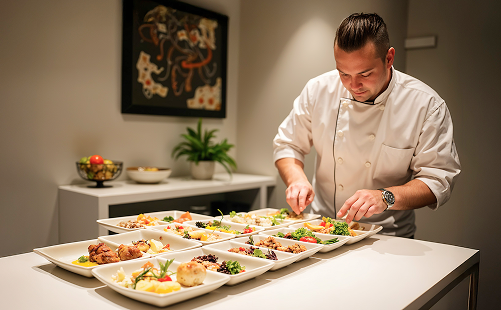
The way food is presented influences how it tastes. Studies in sensory science consistently show that diners rate the same dish higher in flavor and quality when it is presented with visible care and composition versus served without attention to arrangement.
For hosts entertaining at home, this matters practically. A dinner party where every plate arrives composed and considered feels qualitatively different from one where food is simply portioned and served.
The presentation signals to guests that the entire experience was designed for them, and that perception shapes the evening from the first plate to the last.
Essential Food Plating Tools for Home Use
The right tools are what separate competent home cooking from restaurant-quality food presentation. These five cover the full range of professional plating needs at home:
- Squeeze bottles deliver precise sauce placement and controlled drizzle work that a ladle or spoon cannot replicate
- Kitchen tweezers position delicate garnishes and small components without displacing the surrounding plate
- Offset spatula transfers food cleanly from pan to plate without smearing the composition
- Ring molds create structured, layered presentations for grains, tartares, and stacked builds
- White round plates in two sizes provide the most versatile neutral canvas across every cuisine type
Squeeze bottles produce the single most visible improvement for home plating. Sauce placement is where amateur and professional presentations diverge most obviously, and a squeeze bottle closes that gap immediately.
Core Food Plating Techniques Used by Professional Chefs
Negative space is the foundational principle of composed plating. Leaving 30 to 40 percent of the plate uncovered focuses the eye on the food and eliminates visual clutter. Overcrowding a plate is the most common home plating mistake, and correcting it requires no skill, only restraint.
Height and layering give a flat plate dimension. Stacking a protein over a base, or positioning a vegetable element to lean against another component, creates visual depth that reads as intentional composition rather than assembled portions.
Sauce placement frames the food. Sauce applied under, beside, or as a deliberate smear across the plate using a spoon drag enhances the composition. Pouring sauce directly over a plated dish collapses the structure that every other element was built around.
Color contrast completes the plate. A composed dish uses at least three distinct colors. Fresh herbs, citrus zest, microgreens, or a single edible flower placed with precision adds contrast that communicates care without overcomplicating the plate.
Odd number rule is a design principle professional kitchens apply consistently. Three scallops, five asparagus spears, and seven ravioli. Odd groupings create naturally balanced asymmetry that even numbers cannot produce.
What Separates Professional Food Plating from Home Plating
Professional food presentation differs from home plating in three specific ways: timing, consistency, and intentionality.
A professional chef plates every dish with all components finishing simultaneously so proteins rest at the correct temperature, sauces hold their consistency, and garnishes are applied at the last possible moment before service. The plate arrives at the table exactly as designed.
Consistency across multiple plates at the same table is the second differentiator. Professional kitchens set a reference plate and match every subsequent plate to it precisely.
At home, this discipline is rarely applied, and the variation shows.
A private chef brings both standards to in-home dining. The menu is built around the occasion, the plating style is matched to the aesthetic of the evening, and every plate is executed with the same consistency a restaurant kitchen delivers.
The host remains present with their guests through the entire meal.
Common Food Plating Mistakes Worth Correcting
Even well-cooked food loses impact when these habits appear:
- Wiping the rim after plating leaves visible smear marks. Clean the rim before food goes on, not after
- Over-garnishing with multiple herbs, sauces, and textures simultaneously creates noise rather than refinement
- Cold plates cause sauces to set and proteins to lose their surface finish within seconds. Warming plates before service is a standard professional habit
- Inconsistent plating across multiple dishes at the same table signals a lack of attention. Set one reference plate and match every plate to it before service
The Standard Worth Aiming For
Food plating techniques are built from small, repeatable decisions applied with consistency.
Negative space as a default, a squeeze bottle for sauce control, one well-chosen garnish, and plates warmed before service will visibly elevate any dish without requiring formal culinary training.
What guests register is whether the meal was prepared with care.
For hosts where that standard matters on a specific occasion, a private chef manages every element of the experience from the menu design to the final garnish, so nothing is left to chance.
Frequently Asked Questions
The three most impactful food plating techniques for beginners are negative space, precise sauce placement using a squeeze bottle, and adding one fresh garnish for color contrast. These three changes produce an immediate, visible improvement on any plate without requiring advanced culinary skills or professional training.
Negative space in food plating is the area of the plate intentionally left uncovered. Leaving 30 to 40 percent of the plate empty draws the eye toward the food and eliminates the visual crowding that makes plating look amateur rather than composed.
Professional chefs use squeeze bottles for sauce placement, kitchen tweezers for garnish positioning, offset spatulas for clean transfers, ring molds for structured builds, and white round plates as a neutral canvas.
A private chef designs the full dining experience around the occasion including the menu, plating style, and service timing. Every plate is executed with professional consistency, garnishes are applied at the last moment before service, and the presentation is matched to the aesthetic of the event.
To plate food like a restaurant dish, start with a white round plate, leave at least 30 percent of the plate uncovered, use a squeeze bottle for sauce placement, build modest height with the main components, and finish with one fresh garnish placed using tweezers.





 Home
Home
 Chefs
Chefs
 Chats
Chats
 My Order