


 Settings
 Gift Card
 Blog
Blog Locate Us
 Partnership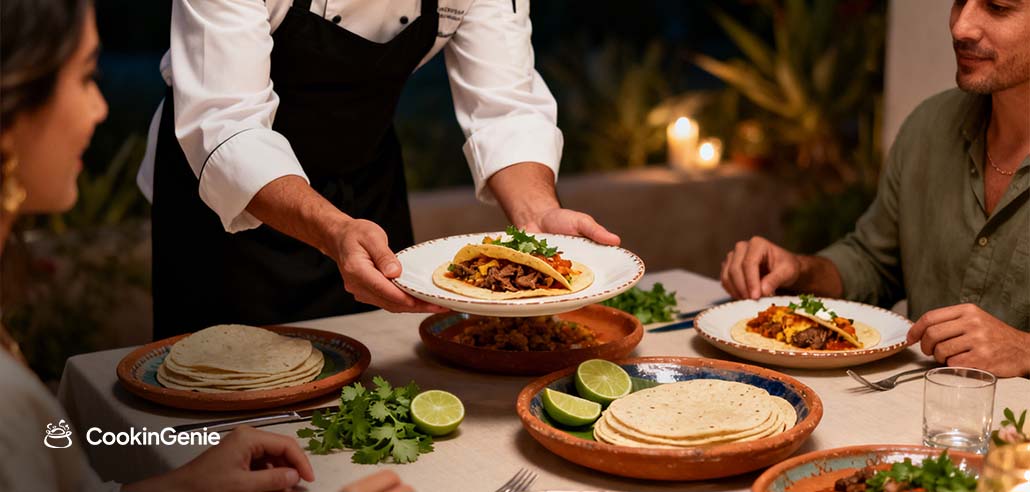

A Complete Guide to Traditional Mexican Dishes for Dinner and Special Occasions
There is a table somewhere in Mexico that has never stopped being set. It is dressed with clay pots and candlelight, with the low simmer of something that has been cooking since morning, and with the scent of dried chiles toasting in a dry pan and chocolate melting into a sauce that has no business being as complex as it is.
It is the kind of table that makes you slow down before you even sit. Traditional Mexican dishes were built for exactly this feeling.
The warmth of a broth that has been going for hours. The first bite of slow-roasted pork that gives way without resistance. A mole so layered, it takes a moment to understand what you are tasting.
It is one of the oldest, most sophisticated culinary traditions on the planet, and it deserves to be experienced as such.
Inside this guide, you will find a curated menu of the finest traditional Mexican food dishes, from silky starters and fire-kissed mains to the slow-cooked celebration centerpieces that make an entire evening unforgettable.
What Are Traditional Mexican Dishes and Why Do They Belong at Your Table
Traditional Mexican dishes are a collection of regional worlds, each fiercely protective of its own ingredients, techniques, and obsessions. Oaxaca and its moles. The Yucatán and its slow-roasted pork wrapped in banana leaves. Veracruz and its seafood are steeped in centuries of coastal tradition. Puebla, the birthplace of mole poblano and Chiles en Nogada. Every dish a product of geography, history, and generations of people who simply refused to cut corners.
Mexican food traditional dishes earned UNESCO’s recognition as an Intangible Cultural Heritage of Humanity. The only cuisine in the world to hold that distinction at the time of its listing.
Traditional Mexican dishes were built slowly and carefully over centuries, and they have survived because they are worth surviving.
The Mexican Table: A Curated Menu
ANTOJITOS AND STARTERS
Sopa de Lima
A delicate broth from the Yucatán, brightened with the region’s prized limes, is smaller and more floral than anything you find elsewhere. Roasted chicken and tortilla strips float within. Elegant in its restraint. The kind of traditional Mexican dish for dinner that makes every course after it feel earned.
Tostadas de Atún with Chipotle Aioli
Crisp blue corn tostadas, sashimi-grade tuna, and a chipotle aioli carrying smoke, heat, and cream in equal measure. Inspired by the raw bar at Contramar, Mexico City’s most quietly legendary seafood institution. Among the finest traditional Mexican fish dishes reimagined as a composed starter.
Elote Esquites, Refined
Street corn, elevated. Roasted kernels, cotija, lime, and chile de árbol, served warm in a shallow bowl. One of the most beloved traditional Mexican vegetable dishes, unapologetically humble in origin and unexpectedly difficult to stop eating.
THE MAIN TRADITIONAL MEXICAN DISHES
Mole Negro Oaxaqueño with Duck Confit
The dish you request when you want the table to go quiet at the first bite. Over thirty ingredients. Mulato, pasilla, and chihuacle negro chiles. Mexican chocolate. Charred tomato. Toasted nuts, fried plantain, and a patience most kitchens cannot afford. Cooked down over days into a sauce of genuinely staggering complexity.
Cochinita Pibil
Pork marinated in achiote and bitter orange, wrapped in banana leaves, and cooked low and long until it surrenders completely. One of the great traditional Mexican pork dishes, requiring nothing more than a scattering of pickled habanero onions to finish.
Camarones al Mojo de Ajo
Jumbo prawns in a bath of slowly golden-fried garlic and butter, finished with lime and chile güero. The finest of traditional Mexican shrimp dishes, deceptively simple and deeply satisfying. The difference between garlic that is caramelized and garlic that is burned is everything here.
Huachinango a la Veracruzana
Red snapper in a sauce of tomatoes, olives, capers, and chiles, where Spanish and indigenous Mexican traditions meet with genuine elegance. One of the most celebrated traditional Mexican fish dishes, served whole for drama and with arroz blanco for balance.
The Supporting Sides
Papas con rajas
Roasted potatoes with charred poblano strips and crema. The kind of traditional Mexican potato dish that quietly steals the table.
Fideos Secos
Toasted vermicelli is simmered in tomato and chipotle until the pasta absorbs every last drop. Among the most comforting traditional Mexican pasta dishes, finished with crema and cotija.
Frijoles de olla and arroz rojo
No traditional Mexican dishes spread is complete without these two. Clay-pot black beans with epazote. Red rice cooked in tomato broth until each grain stands alone. The foundations. The things that make everything else make sense.
The Celebration Centrepieces
Chiles en Nogada
Poblano chiles filled with spiced pork, dried fruit, and nuts are draped in walnut cream sauce and finished with pomegranate and parsley.
The colors of the Mexican flag on a single plate. The most theatrical of all traditional Mexican dishes for dinner, available only in season and worth planning an entire evening around.
Pozole Rojo
A ceremonial broth of hominy corn and slow-cooked pork, built on dried red chiles and over a thousand years of Mexican celebration. Brought to the table with shredded cabbage, radish, oregano, and lime.
The Table is Already Set. Where are You?
The dishes above are not relics. They are living recipes carried forward by people who understood that food is the most generous form of hospitality. A mole that took three days. A Cochinita that slow-cooked through the night. That anticipation, of knowing something extraordinary is being prepared for you, is half the pleasure.
These dishes demand respect for technique and sourcing. A successful traditional Mexican dinner requires:
- Proper ingredients: Authentic dried chiles (mulato, pasilla, chihuacle), Mexican crema, epazote, and heirloom masa
- Technique: Low-temperature cooking, proper chile toasting, and layered flavor building
- Time commitment: Mole requires 2-3 days; Cochinita Pibil needs 8+ hours of slow cooking
Whether cooking at home or hiring a professional, prioritize chefs with direct experience in regional Mexican kitchens
Your Mexic-urious Questions, Answered.
Mole Negro, Chiles en Nogada, and Huachinango a la Veracruzana. Each brings visual drama, layered flavor, and the kind of culinary heritage that makes a formal table feel genuinely considered.
Yes. Traditional Mexican vegetable dishes like Elote Esquites, roasted chayote with crema, and sautéed quelites with garlic and chiles are full courses, not consolation prizes. In the right hands, they are as compelling as anything else on the table.
Yes, with proper sourcing. Source dried chiles from specialty suppliers, find Mexican crema and epazote at local Latin markets; authentic cooking technique matters most.
Long cooking times, acidic marinades, and layered chile complexity. Achiote and bitter orange are in Cochinita Pibil. Chili-laced lard in Carnitas. The result is traditional Mexican pork dishes that are deeply flavored, impossibly tender, and unmistakably themselves.
At least 2 weeks for most menus. For mole negro or Chiles en Nogada, more is better. CookinGenie lets you co-design the menu directly with your CookinGenie private chef so every course arrives exactly as you envisioned it.






 Home
Home
 Chefs
Chefs
 Chats
Chats
 My Order