


 Settings
 Gift Card
 Blog
Blog Locate Us
 Partnership

What Food Should You Serve at a Party? (A Private Chef Answers)
Key takeaways
- Plan 1 to 1.25 pounds per person, or 6 to 8 finger-food bites.
- Guests eat heavily in the first hour, so lead with lighter bites first.
- Texture and temperature variety matter more than the sheer number of dishes served.
- Stagger your spread instead of serving everything at once, so nothing goes lukewarm.
- Keep one substantial, protein-forward dish ready to prevent an evening lull.
- The first hour of a party is when guests are hungry, not in the middle.
- Guests arrive with an appetite and have nothing to do with their hands yet.
- They eat heavily right at the start, then taper off as conversation takes over.
- Keep your rich dish away from the door.
You don’t need a culinary degree to feed a room well. What you need is the handful of decisions a private chef makes before a single dish hits the table, timing, portioning, and knowing which two dishes are doing the work while the rest just sits there looking pretty.
Here’s how a chef thinks about it, so you can borrow the same playbook for your next party. Whether you’re planning a casual summer gathering, a Labor Day weekend bash, or a holiday spread later in the year.
How much food do you need per person
This is where most hosts either panic and over-order or guess low and run dry by nine o’clock. Plan for 1 to 1.25 pounds of food per person across the whole spread. Mains, sides, and dessert included a figure that lines up with standard catering math.
For a party where finger foods are the entire meal rather than a supplement to one, that translates to roughly 6 to 8 pieces per person, closer to 10 to 12 if the party runs long, or the crowd skews toward big eaters.
Buffet and cocktail style events tend to need a touch more than a seated dinner, since guests graze more freely and take a bit of everything they like.
Consider building about 10 to 15 percent extra for that reason alone.
What food works well for the first hour of a party
Here’s something most hosts get backwards.
CookinGenie’s guide to hosting a 4th of July party covers this exact pacing mistake, since it shows up at nearly every outdoor gathering.
What food ideas hold up at a party
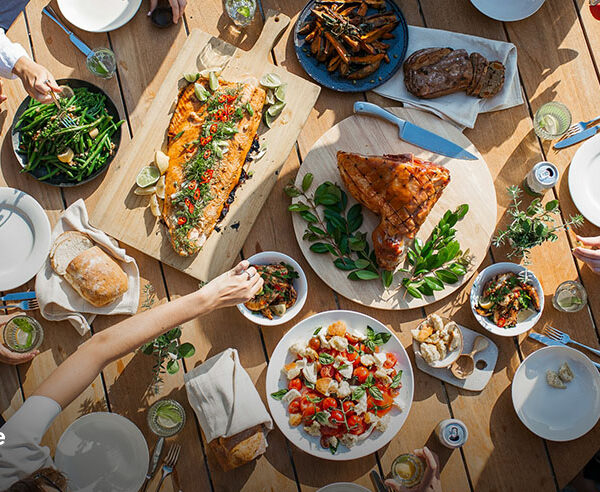
Here’s the shortlist worth keeping in rotation, organized by what each dish solves.
None of this requires a chef’s level of skill. It requires restraint and knowing which two or three dishes are doing the actual work while the rest is just company on the table.
If your gathering has a holiday theme, CookinGenie’s full Christmas party food guide applies the same principles to a seasonal spread.
How do you handle different diets without making two menus
This is a common worry, and the fix is simpler than most hosts expect. Rather than building a separate vegetarian menu and a separate everyone else menu, build dishes that are naturally flexible at the edges. A vegetable skewer works whether or not there’s a meat version next to it. A whipped white bean & truffle dip needs no adjustment for anyone.
Cheese boards work for many guests, though vegan and dairy-free diets usually need a separate option alongside them.
The one place worth building separately is protein. If lamb skewers are the centerpiece, make sure there’s a plant-based option that stands on its own rather than reading as an afterthought.
What is the one dish every good party needs
If one dish has to hold a party together, bet on something substantial and protein forward, arriving partway through rather than at the start.
This is the dish that keeps the evening from running on empty once the lighter bites are gone and guests are three drinks in with real appetite returning.
| Party stage | What to serve | Why |
| First hour | Light, cool, easy to eat one handed | Guests arrive hungry and eat quickly right away |
| Middle stretch | Warm dishes, cheese board, dips | Signals effort, gives grazers something to return to |
| Hour two onward | One substantial protein dish | Prevents the lull once early bites are gone |
| Closing | A single dessert bite | Ends the evening on a clear, sweet note |
What separates a host from a chef
Every host makes the same mistake at least once, putting out too much food too early, then watching half of it go untouched while guests save room for whatever comes next.
In private chef work, service pacing is everything. Rather than setting all the food out at once, stage your courses in waves matched to the room’s energy.no
Pick two or three dishes to do the real work, stagger them so the spread evolves through the night, and let everything else be company on the table rather than competition for attention.
That’s genuinely the whole answer, and it also happens to be exactly what a private chef spends years learning to execute without thinking twice.
The ingredient no recipe lists
Timing never shows up on a recipe card, yet it’s the difference between a party that runs itself and one that runs the host.
Whether you handle that timing yourself or hand it to a CookinGenie chef, the goal stays the same, guests who never notice the effort, only the evening.
Frequently asked questions
Plan for roughly 20 to 25 pounds of food total across mains, sides, and dessert, or about 120 to 160 individual bites if the event is finger food only.
Cheese boards, dips with good bread or vegetables, and skewers all hold their quality well during service when handled according to food safety guidelines, which makes them low-stress dishes to serve.
Stagger it. Put lighter bites out early, add warmer dishes as the party settles in, and bring out one substantial dish partway through to prevent a lull.
Build dishes that are naturally flexible: vegetable skewers, whipped white bean & truffle dips, and cheese boards, and keep only the centerpiece protein as a separate option alongside a plant-based alternative.
Plan for 6 to 8 pieces per person for a typical cocktail party, closer to 10 to 12 if the event runs longer than two hours or skews toward heartier eaters.
For a Labor Day gathering, stick to the same timing and portion guidelines, but lean into seasonal late-summer flavors. Start with a light bite like compressed watermelon bites with mint & balsamic reduction” or “seared ahi tuna crostini in the first hour, transition to a crowd-pleasing protein off the grill for your main phase, and round it out with a crisp vegetable platter and simple berry dessert.




 Home
Home
 Chefs
Chefs
 Chats
Chats
 My Order