


 Settings
 Gift Card
 Blog
Blog Locate Us
 Partnership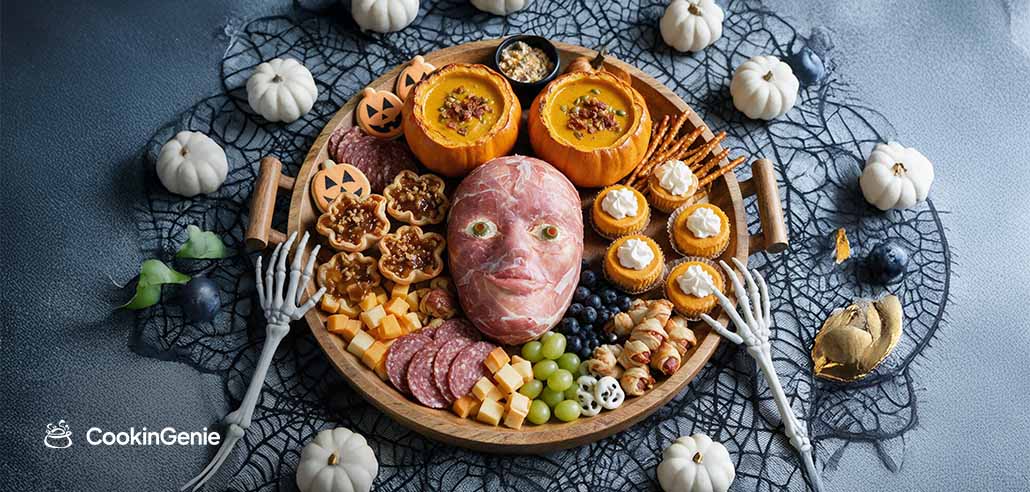

Halloween Charcuterie Board: What a Private Chef Does Differently
Key Takeaways
- Halloween has grown into a full, entertaining occasion, and a private chef is one of the fastest-growing ways hosts choose to mark it.
- A great Halloween charcuterie board comes down to restraint: a couple of well-chosen seasonal touches, deliberate color grouping, and enough negative space to keep the layout calm and legible.
- A private chef brings experience in sourcing, styling, and timing, so the board looks its best the moment guests walk in.
- Hiring a private chef for the night frees up a host’s evening: the shopping, the styling, and the cleanup all fall to the chef.
- A little upfront, credentials, reviews, and a clear written agreement make booking a private chef for Halloween a straightforward decision.
Ask a private chef about which holiday brings the boldest requests, and Halloween wins every time. Hosts ask for a kitchen that looks like a stage and a table that looks like a movie scene.
A charcuterie board looks simple on the surface: cured meats, cheeses, crackers, and fruit, but building one that photographs well and tastes even better takes a trained eye. Chefs who build these boards for a living think in terms of color balance, ingredient temperature, and how a board holds up under two hours of party lighting before anyone takes a bite.
Expertise is exactly what CookinGenie’s private chefs bring to Halloween bookings, and it shows up first in the seasonal charcuterie techniques they use to turn a standard grazing spread into the centerpiece of the night. The charcuterie board is where that instinct first shows up, since it is the piece guests see before they have taken off their coats.
The chef’s approach to a Halloween Charcuterie board
Chef Tinorris, whose Halloween multi-course menus are among CookinGenie’s most rebooked, builds the board as the first course of the evening. A grazing board stays on the theme: cured meats, cheeses, crackers, nuts, and fruit. The difference between a board made by a private chef and one thrown together fast is all in the details. Where you place bright colors, like fruit. Where you place dark colors, like olives.
Color is the first decision: Cheddar or Gouda cut into pumpkin and ghost shapes become the board’s orange anchor. For guidance on which meats hold their color and flavor best under party lighting, CookinGenie’s charcuterie meat is a useful starting reference. Black olives, dark grapes, and blackberries get grouped together rather than scattered, since grouping color reads as “styled,” while scattering it reads as an afterthought.
Spacing is the second decision: A board packed edge-to-edge reads as visual clutter in photographs, regardless of how good the ingredients taste. A chef leaves small gaps, tucks a few grapes into the open space, and lets each element breathe.
Restraint is the third decision, and the one that rewards a host most: One sharp “trick” element, an olive-and-pretzel spider, a cheese ghost, does more work than five competing gimmicks on the same board. CookinGenie’s private chefs apply this same philosophy to full Halloween menus, favoring a few strong seasonal touches over a long list of competing ideas.
The full table: Signature dishes built around the board
The board sets up the tone, and a private chef typically builds premium set up around it. Ideas listed below come directly from menus CookinGenie chefs who have plated for real Halloween bookings, including the flayed-face cheese ball that anchors many of their client menus.
A board that looks intentional, paired with a menu that genuinely delivers, does more for a host’s reputation than any single showstopper dish. That combination is what guests bring up again at the next party, and it is the same reasoning CookinGenie lays out in its explanation of why a private chef feels more personal than traditional catering.
Why are hosts booking a chef for Halloween
Halloween has become one of the more personal entertaining occasions on the American calendar, loose enough that hosts can be genuinely playful with the food. That freedom is exactly why more hosts are paying to get it right.
According to the National Retail Federation’s consumer survey, Halloween spending hit a record of $13.1 billion, up from $11.6 billion in 2024. About one in three consumers planned to host or attend a Halloween party, which is exactly where a styled charcuterie board earns its keep.
A private chef essentially replaces the host’s evening. As CookinGenie’s guide on hiring a private chef explains, the chef handles menu planning, shopping, prep, cooking, plating, and cleanup, so the host can enjoy the party instead of working it.
The last word
Halloween in America has moved well past a bowl of candy corn split into a serving dish. It has become one of the year’s more theatrical nights to host, and the charcuterie board is usually the first thing that tells guests how seriously the evening was planned.
This is ultimately what a private chef delivers: not just a board, but the confidence of someone who has built this exact scene before, for another host, on another October night. As Halloween spending climbs to record level year after year, more hosts are reaching the same conclusion, that one night this person is worth getting right the first time.
This guide is published by CookinGenie, a private chef booking platform available across 75+ US cities.
Frequently Asked Questions
Color and shape make a difference. Orange-toned cheeses, dark-fruit contrast, and one or two shaped elements, like a ghost or pumpkin cutout, turn a standard grazing board into something clearly seasonal while keeping the core ingredients the same.
Yes. Board size and complexity scale with guest count, so a board for eight looks different in scope than one for thirty, though the same principles of color, spacing, and restraint apply at any size.
Cookie cutters are the main extra, and most kitchens already have a few pumpkin or ghost shapes left over from baking season. Everything else is standard charcuterie equipment.
Same-day assembly holds up best, since cut cheese and fruit start to look tired after several hours out. Most private chefs build the board on-site shortly before guests arrive.
Yes. The value shows up in time saved and presentation quality at any guest count, though total cost naturally scales with the number of people being fed.




 Home
Home
 Chefs
Chefs
 Chats
Chats
 My Order