


 Settings
 Gift Card
 Blog
Blog Locate Us
 Partnership

How Private Chefs Bring Authentic Kaiseki Japanese Cuisine into the Home
Private chefs bring authentic Japanese Kaiseki cuisine into the home by preparing each course with a balance of seasonal ingredients, precise timing, and traditional techniques such as dashi-making, sashimi-slicing, and tempura-frying, all done directly before serving. Every dish is plated and served at the right moment, so guests experience Japanese kaiseki as intended: fresh, balanced, and deeply connected to seasonality.
What is a Kaiseki Dinner and Why Do Private Chefs Handle it So Well?
A kaiseki dinner is a multi-course expression of balance and impermanence. Each course follows strict seasonal logic, texture, temperature, and aroma arranged in deliberate sequence. A private chef controls this pacing in real time, adjusting plating order and heat without the delays of restaurant kitchens.
Kaiseki began as a simple tray served before a tea ceremony with soup, rice, and a few seasonal bites. Over centuries, it evolved into one of Japan’s most refined dining traditions shaped by restraint, seasonality, and intention.
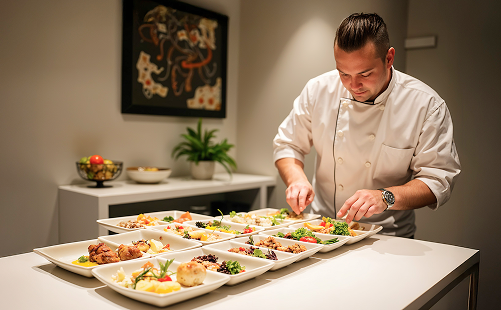
A chef approaches mise en place with quiet, deliberate precision, guiding the entire experience at home.
- Courses arrive at the exact moment they are ready.
- Steam lifts gently from clear dashi, carrying the aroma of kombu and bonito.
- Fresh tempura reaches the plate while the batter is still whisper-light and crisp.
- The knife glides through daikon, leaving behind slices as delicate as translucent petals.
- Texture stays sharp, flavor stays vivid, and every small detail feels intentional.
The Anatomy of a Modern Kaiseki Dinner at Home
Kaiseki carefully arranges the structure to appear effortless and graceful.
A private chef curates the flow:
- Sakizuke (Appetizer)
A bright introduction, often a reflection of the season, think snow crab with yuzu jelly in winter or sakura shrimp in spring.
- Hassun (Seasonal Platter)
A visual anchor connecting mountain and sea. Plating here decides the evening’s color language.
- Mukozuke (Sashimi Course)
Sourced that morning, a temperature shift of a few degrees alters the mouthfeel of otoro or snapper.
- Agemono (Fried Course)
Tempura fried seconds before plating, light batter maintained by strict oil temperature.
- Yakimono (Grilled Course)
The heartbeat of the dinner, where mackerel, wagyu, or miso-marinated cod meet precise caramelization.
- Gohanmono, Tomewan, Ko no Mono (Rice, Soup, Pickles)
The comfort at the end is a quiet palate reset.
- Mizumono (Dessert)
Subtle sweetness, often fruit or agar with matcha.
Each dish feels carefully curated while the private chef moves with calm, practiced precision.
Why Kaiseki Belongs in Private Chef Hands?
Because timing and technique define it.
Restaurant service fights chaos with multiple orders, ticket times, and compromised pacing, but kaiseki thrives on quiet precision. The rice rests exactly six minutes before shaping, while every fish leaves the grill the moment the aroma caramelizes, allowing a private chef to react second by second and keep each plate aligned with the peak of flavor.
There’s also ingredient intimacy that a private chef can source sansho leaves or yuba from local Japanese purveyors, handle them directly, and taste every component before committing to final plating.
The Timing Behind Japanese Kaiseki Cooking
Kaiseki chefs often say a meal can fall apart because of silence at the wrong moment, not awkward silence, but timing silence.
The pause between removing the lid from the simmered daikon and brushing it with shoyu glaze. Wait too long, and moisture flees, flavor dulls. Rush it, glaze breaks. There’s a rhythm to Japanese heat control, closer to breathing than measurement.
Seasonal Ingredients Behind Every Curated Kaiseki Course
Every ingredient in kaiseki is chosen with seasonality, balance, and timing in mind, allowing private chefs to build a meal that feels deeply personal.
| Ingredient | Season | Kaiseki Use | Chef’s Detail |
| Yuzu | Winter | Zest over soup, ponzu, desserts | Added at the last second for its fresh citrus aroma |
| Kombu | Year-round | Base for dashi broth | Slowly steeped to build quiet umami without heaviness |
| Shiso Leaf | Summer | Garnish for sashimi and cold dishes | Brings an herbal freshness that cuts through richness |
| Sakura Shrimp | Spring | Tempura or rice dishes | Delicate sweetness deepens when lightly crisped |
| Matsutake Mushroom | Autumn | Clear soup or grilled course | Valued for its earthy aroma more than intensity |
| Daikon Radish | Winter | Pickled, grated, or finely sliced | Balances richer dishes with clean sharpness |
| Black Sesame | Year-round | Sauces and desserts | Adds warmth and subtle nuttiness |
| Uni (Sea Urchin) | Seasonal | Served over rice or small bites | Creamy texture works best when served chilled and fresh |
| Miso | Year-round | Marinades, soup bases, glazes | Different aging styles completely change depth and sweetness |
| Japanese Eggplant | Summer | Grilled or miso glazed | Turns silky soft while holding smoky flavor beautifully |
Kaiseki at home transforms dinner into a thoughtful, seasonal experience, with every course prepared and served with precision, care, and perfect timing.
How Private Chefs Translate Kaiseki Philosophy Without Losing Tradition
Kaiseki has a rigid sequence, but within that, freedom lives. A chef adjusts the plating curve for tables smaller than traditional Japanese counters. Chooses dishes slightly deeper to hold warmth longer. Moves the sashimi to third place instead of second if the ambient temperature creeps above 24°C.
Preserving authenticity means understanding the origins, proportions, and feelings of each element, then adapting those ideas with awareness to the home setting.
What Happens Behind a Kaiseki Dinner at Home?
A kitchen mid-kaiseki looks peaceful to an outsider, but every minute hides a countdown.
The rice steams gently as grill marks deepen on the eggplant and the dashi cools to the perfect temperature for sashimi. A chef wipes a microdrop of soy glaze off porcelain with a cotton cloth, steady hands despite adrenaline. Guests never see the clock, the sequencing, the small panic when tempura oil dips below 170°C.
FAQ
They design a seasonal menu, source ingredients personally, handle cooking and plating live, match sake pairings, and manage service timing precisely.
Typically, it takes two to three hours, depending on course count and conversation flow.
Yes. Private chefs often modify dishes around dietary needs while preserving the sequencing logic and seasonal balance.
Not strictly. A chef may integrate local produce or seafood if it respects Japanese technique and seasonal intent.
High-level. It demands deep understanding of dashi balance, knife precision, plating philosophy, and thermal timing skills shaped by years of repetition.
Conclusion
A private chef’s kaiseki thrives on calibration. It is a balance of temperature, rhythm, and silence. The dinner concludes with a warm towel, a lingering sip of tea, and the quiet realization that everything landed exactly right.
This experience offers the comfort of time as the chef leaves the kitchen spotless. In the end, it reflects the attentive hospitality of Japanese dining.




 Home
Home
 Chefs
Chefs
 Chats
Chats
 My Order