



 Settings
 Gift Card
 Blog
Blog Locate Us
 Partnership

Tips for Sustainable Cooking- Techniques and Benefits
Sustainable cooking practices are food preparation approaches that minimize environmental impact, reduce waste, support local food systems, and prioritize nutrient-dense ingredients.
The food system as a whole accounts for approximately one third of global greenhouse gas emissions according to the IPCC, making household cooking choices one of the most accessible levers individuals have for reducing their environmental footprint.
Cooking sustainably does not require a complete overhaul of how you eat. It requires a series of considered practical changes applied consistently.
Why Sustainability in Cooking Matters?
The scale of the problem makes individual kitchen choices genuinely consequential. According to the FAO, approximately one third of all food produced globally is lost or wasted each year.
In the United States, the EPA identifies food as the single largest category of material placed in municipal landfills, where it generates methane, a greenhouse gas significantly more potent than Co2 in the short term.
Sustainable kitchen practices address these impacts directly, through what is purchased, how it is prepared, and what happens to what is left over.
Sustainable Cooking Methods That Reduce Environmental Impact
The techniques used in the kitchen have a direct bearing on energy consumption, water use, and food waste. These sustainable cooking methods produce meaningful results without requiring significant changes to what you eat.
Efficient Energy Use
Using the correct burner size for the pan, keeping lids on pots during cooking, and matching oven use to batch cooking rather than single dishes reduces household energy consumption measurably.
Reducing Meat Consumption
The IPCC’s Special Report on Climate Change and Land identifies shifting toward plant-based diets as one of the highest-impact individual actions available, with the potential to reduce food system emissions by up to 8 gigatons of CO₂ annually at scale.
Replacing beef and lamb with legumes, tofu, or plant-based proteins two to three times per week produces a measurable reduction in a household’s food-related emissions without requiring a complete dietary change.
Eating Plant-based Meals
Plant-based meals require fewer natural resources to produce than animal-based equivalents across land use, water consumption, and emissions.
Incorporating plant-based centrepiece dishes like mushroom bourguignon, roasted root vegetable Wellington, lentil-based curries as regular features rather than occasional alternatives is one of the more straightforward sustainable cooking methods available.
Reducing Water Usage
Steaming vegetables rather than boiling them conserves water and retains more nutrients simultaneously.
Running dishwashers only when full uses less water than hand-washing equivalent loads. These are small adjustments with cumulative impact across a household year.
Sustainable Kitchen Practices for Daily Habits
Sustainable kitchen practices extend beyond what is cooked to how the kitchen itself is managed day to day. Do:
- Meal planning before shopping
- Composting food scraps
- Buying seasonal and local produce
- Avoiding single-use plastics
- Proper food storage
How a Private Chef Supports Sustainable Cooking at Home
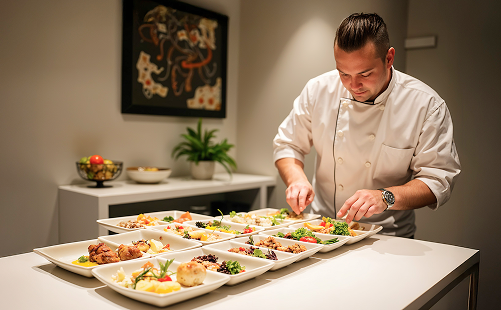
One of the less obvious ways to improve the sustainability of a household’s cooking is to bring in a professional who applies these practices as a matter of course rather than conscious effort.
A private chef plans the entire menu before purchasing a single ingredient. Every item sourced has a specific purpose in the meal.
This precision eliminates the over-purchasing and forgets produce that drives most household food waste. Professional kitchen discipline, built around the setup principle, means nothing enters the kitchen without a plan for how it will be used.
For households that want to eat more sustainably without the research, planning, and execution burden that genuine sustainable kitchen practices require, a private chef is the most complete available solution.
Frequently Asked Questions About Sustainable Cooking
The highest-impact practices are reducing meat consumption, particularly beef and lamb, buying seasonal and local produce, planning meals before shopping to eliminate food waste, and composting organic scraps. According to IPCC research, dietary shifts toward plant-based meals represent one of the most significant individual contributions to reducing food system emissions.
Replacing animal protein with plant-based alternatives two to three times per week produces a measurable reduction in a household’s food-related carbon footprint without requiring a complete dietary change. Or hiring a private chef for creating balanced diets and planned meal can reduce the improper meat consumption too.
Start with hiring a personal chef meal planning. Also, before every shop to eliminate over-purchasing, introduce a composting system for organic waste, replace single-use plastics with reusable alternatives, and prioritise seasonal produce from local sources. These four changes address the most common sources of household food-related waste and emissions.
Yes. A private chef plans menus precisely around what will be used, sources seasonal and local ingredients by default, applies professional food storage and waste reduction discipline, and can implement plant-based cooking at a quality that makes it a genuine preference.








 Home
Home
 Chefs
Chefs
 Chats
Chats
 My Order