


 Settings
 Gift Card
 Blog
Blog Locate Us
 Partnership

How to Hire a Private Chef for Dietary Restrictions
Key takeaways
- Many private chefs can customize menus for gluten-free, dairy-free, vegan, vegetarian, allergy-related, and multiple dietary requirements.
- Food preferences, intolerances, celiac disease, and food allergies can require different levels of preparation and cross-contact precautions.
- Before booking, discuss ingredients, shared equipment, preparation practices, relevant training, and the chef’s experience with your specific requirements.
- A private chef can offer greater ingredient visibility and direct communication, but no chef or platform should promise zero risk of allergen exposure.
Food allergies and dietary restrictions can turn an ordinary dinner into a list of questions. What’s in the sauce? Was the same equipment used for another dish? Can the chef handle three guests who eat three different ways?
For more than 33 million Americans living with food allergies, careful food decisions are part of everyday life. The same is true for households managing diabetes, weight goals, or training nutrition, where consistency matters as much as flavor.
Hiring a private chef can offer greater ingredient visibility, direct communication with the person preparing the food, and a menu shaped around individual needs, though accommodation should never be assumed. The right chef depends on your specific needs, their relevant experience, the cooking environment, and the preparation practices required.
Can a private chef accommodate dietary restrictions?
Yes, many private chefs can customize menus around dietary restrictions and preferences. Instead of choosing from a fixed restaurant menu, you discuss requirements with the chef before the menu is finalized.
The level of accommodation depends on why a food is avoided.
- A vegan preference primarily affects ingredient selection.
- Lactose intolerance may require substitutions and careful checking, since roughly 36 percent of people in the United States have lactose malabsorption.
- Celiac disease and food allergies call for added precautions to reduce cross-contact.
A household managing several needs may require one shared menu built around ingredients everyone can eat, or individually customized dishes. Chef Rachel Stritz shows this range in practice, with a family-style à la carte menu that spans kid-friendly plates alongside a tofu and hummus wrap for guests eating plant-based.
The more medically significant your needs, the more important it becomes to evaluate the individual chef before booking.
Cooking for health goals, not just allergies
Not every dietary requirement comes from an allergy. Many private-chef bookings are health-driven, from a diabetic-friendly rotation to precision nutrition for marathon training or a body-composition goal.
For this kind of ongoing arrangement, a recurring meal-prep relationship tends to work better than a single dinner.
Chef Brandon Kindell offers a customizable multi-day meal-prep menu built around a planning call, so proteins, sodium, and portioning can be adjusted to a client’s health targets before the week starts.
A chef who cooks for the same household repeatedly learns the pattern and removes the daily decision fatigue of managing a therapeutic or performance diet alone.
What is an allergy-friendly private chef?
An allergy-friendly private chef is generally one with relevant experience, training, and preparation procedures for cooking around food allergies. Find out whether the chef has experience with your allergy, how ingredient labels are checked, whether shared equipment is used, and what steps reduce cross-contact.
Per the U.S. Food and Drug Administration, the nine major food allergens are milk, eggs, fish, crustacean shellfish, tree nuts, peanuts, wheat, soybeans, and sesame.
Training such as ServSafe Allergens covers allergen identification, cleaning, cross-contact prevention, and guest communication, though certification alone doesn’t guarantee fitness for every allergy.
Readers with diagnosed food allergies should follow their healthcare professional’s advice and continue carrying prescribed emergency medication regardless of any kitchen precautions.
How do private chefs reduce the risk of cross-contact?
Cross-contact happens when an allergen unintentionally transfers from one food or surface to another. A private chef lets diners discuss these risks directly and ask what precautions the kitchen allows.
Precautions may include checking labels, thoroughly washing hands and surfaces, using separate cutting boards, and preparing allergen-sensitive dishes first.
The Food Allergy Research & Education (FARE) guidance on cross-contact advises that wiping crumbs from a surface isn’t sufficient; surfaces should be washed with soap and water instead.
Equipment matters too. For celiac disease, a shared toaster or colander may pose a risk that wouldn’t apply to gluten-free food made purely by preference. Explaining why you avoid an ingredient helps the chef plan accordingly.
Hiring a gluten-free private chef? Ask these questions first
Explain whether you avoid gluten by preference, non-celiac sensitivity, celiac disease, or wheat allergy. Celiac disease affects roughly 1 in 133 Americans, and most remain undiagnosed, so precision matters more than the label alone.
Ask whether the chef has cooked for the same need before, how ingredients are checked for gluten, whether shared toasters or fryers are used, and whether gluten-free dishes can be prepared first or separately.
A dish with no intentionally added gluten can still be unsuitable for celiac disease because of cross-contact. “Gluten-free” and “safe for celiac disease” are not interchangeable claims.
Can one private chef cook for several dietary restrictions?
Yes, depending on the chef’s experience. One approach is a shared menu built around ingredients everyone can eat. Another is customizing individual dishes when needs conflict.
A household might include a guest with celiac disease, another eating vegan, and someone with a nut allergy.
Chef Sean Waligora offers dishes like a vegan tortilla soup and a vegan stir fry alongside his other menu options, making it easier to build a shared table where one guest’s needs don’t dictate everyone else’s plate.
For food allergies specifically, menu variety alone isn’t enough. Experience and preparation practices should still be discussed before booking.
What should you tell your private chef before booking?
Share dietary information as early as possible. The chef will benefit from knowing:
- Every ingredient or food that must be avoided
- Whether it’s a preference, intolerance, allergy, celiac disease, or another medically required diet
- The severity of any diagnosed allergy
- Whether cross-contact is a concern
- How many guests have requirements, and whether they conflict
- Any shared-equipment concerns
“Dairy-free” gives some direction. “A diagnosed milk allergy with shared-equipment concerns” gives the chef far more to work with.
How to choose the right private chef for your dietary needs
A simple SAFE framework helps here.
- Specialization. Experience with vegan menus doesn’t mean experience with severe allergies, and family-meal experience doesn’t mean experience with a strict diabetic plan.
- Allergen and dietary training. Credentials like ServSafe Allergens are useful evidence of education, but weigh them alongside practical experience.
- Food and preparation transparency. A suitable chef should clearly discuss ingredients, substitutions, and preparation practices.
- Experience that matches your needs. Ask whether the chef has cooked for similar requirements before, whether those are severe allergies, a recurring health diet, or a split household.
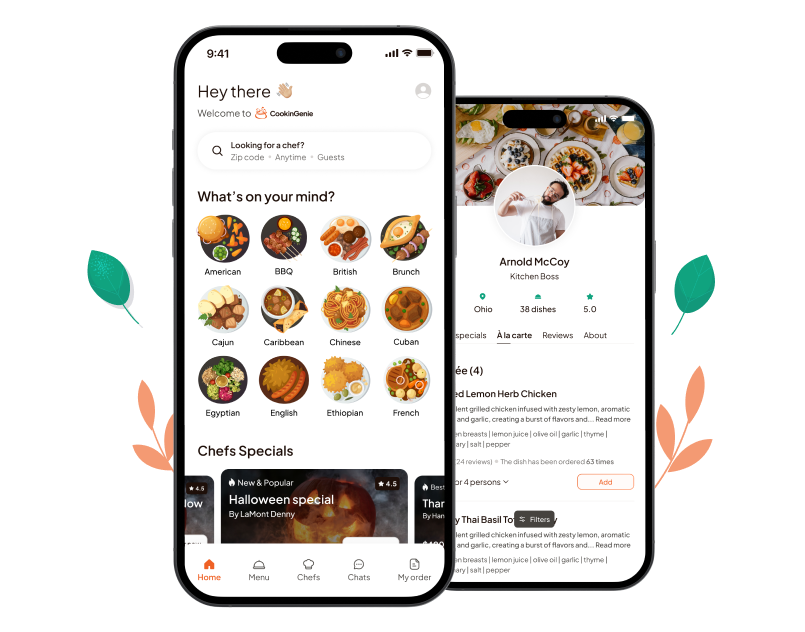
CookinGenie lets diners browse chef profiles and menus before booking. Use each profile as the start of your evaluation, then discuss your specific requirements directly with the chef. Use the SAFE framework (Specialization, Allergen and dietary training, Food and preparation transparency, and Experience) that matches your needs, when reviewing CookinGenie chef profiles to evaluate whether a chef is a suitable fit for your dietary requirements.
How much does a private chef for dietary restrictions cost?
On CookinGenie, private chef dinners accommodating dietary restrictions typically start from $150–$200 per guest for a customized menu, with recurring meal-prep arrangements priced separately.
Specialty ingredients or several individually customized dishes can raise the price, and a recurring meal-prep arrangement, like Brandon Kindell’s multi-day plans, is typically priced differently than a single dinner.
CookinGenie uses an à la carte model, so diners can review individual chefs, dishes, and pricing rather than relying on a single national estimate.
How to book a private chef for dietary restrictions
Find chefs available in your area and review their profiles, menus, and experience. Share your dietary requirements before finalizing the menu, explaining why certain foods must be avoided and whether cross-contact is a concern.
Once you’ve found a chef who can accommodate your needs, choose your menu and complete the booking.
Explore CookinGenie chefs, review their menus and profiles, and find someone whose experience fits the way you need to eat.
FAQs
Can a private chef accommodate food allergies?
Many can, but capabilities vary. Discuss the specific allergy, its severity, cross-contact concerns, and the chef’s relevant experience before booking.
Can I hire a gluten-free private chef?
Yes. Explain whether you avoid gluten by preference, sensitivity, celiac disease, or wheat allergy, since the appropriate precautions can differ.
Is a private chef safer than a restaurant for food allergies?
A private chef offers direct communication and more ingredient visibility, but no environment is automatically safe for every allergy. Risk depends on the chef, kitchen, and preparation procedures.
Can a private chef accommodate multiple dietary restrictions?
Yes, depending on experience and complexity. A chef may create a shared menu around compatible ingredients or customize dishes per guest.
When should I tell a private chef about dietary restrictions?
During the initial inquiry, before the menu is finalized. Early communication gives the chef time to evaluate the requirements and plan accordingly.
How much does an allergy-friendly private chef cost?
Pricing varies by chef, location, guest count, and complexity of accommodations. Reviewing individual chef menus and pricing gives the most accurate estimate.






 Home
Home
 Chefs
Chefs
 Chats
Chats
 My Order