


 Settings
 Gift Card
 Blog
Blog Locate Us
 Partnership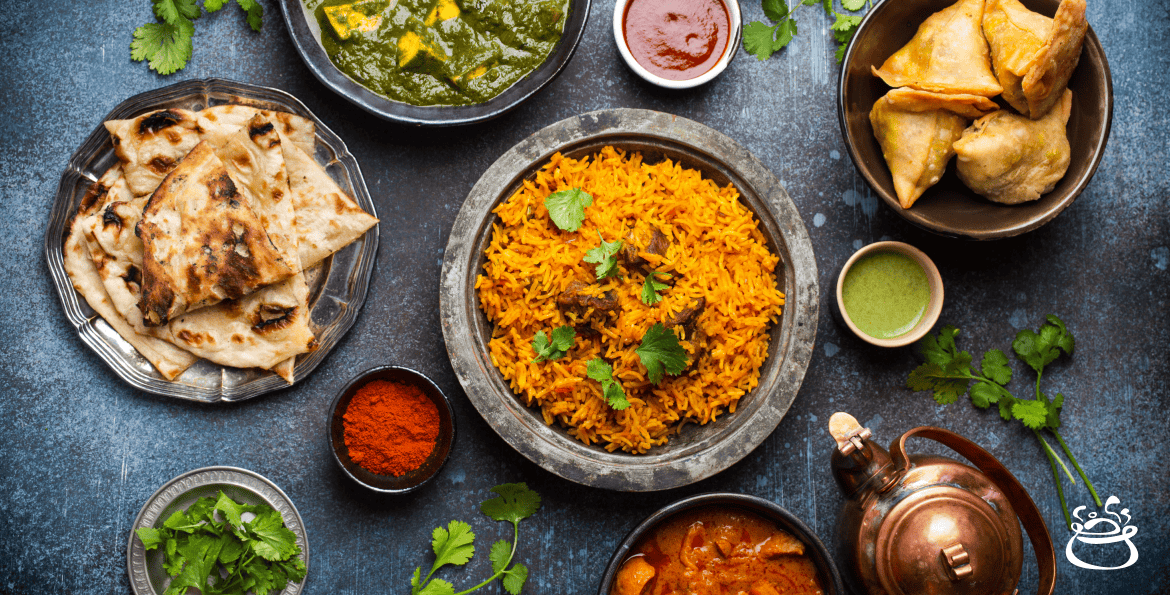

How to Build an Indian Vegetarian Dinner Party Menu That Impresses From the First Bite
TL;DR
- Indian vegetarian cuisine has a natural multi-course structure built for contrast, from crisp starters to rich mains to indulgent desserts
- The key is sequencing dishes by weight and flavor rather than familiarity
- This guide covers every course with specific dish recommendations and a private chef solution for effortless execution
- One well-executed Indian vegetarian dinner party is more memorable than any standard dinner party format
Indian vegetarian cooking is one of the most layered and diverse culinary traditions in the world. Centuries of regional variation across Punjab, Bengal, Goa, and South India have produced a vegetarian repertoire so complete that no course feels like a compromise.
The starters are textural and vibrant. The mains are rich and deeply spiced. The desserts are built on milk, sugar, and spice in combinations that feel genuinely distinct from anything a Western dinner party typically closes with.
If you are planning a dinner party and want a menu that surprises, satisfies, and stays in memory, this guide walks through exactly how to build one.
How to sequence an Indian vegetarian dinner party menu
The most important decision is not which dishes to serve but in what order and why.
A well-sequenced Indian vegetarian menu moves from light and crisp to rich and layered to sweet and warm. Here is a complete framework to build from.
| Course | Dishes | Taste |
| Starter | Vegetable Samosa, Paneer Tikka, Pani Puri, Spinach Pakora | Crisp, smoky, tangy, earthy |
| Main course | Palak Paneer, Dal Makhani, Baingan Bharta, Vegetable Biryani | Creamy, deeply savory, smoky, aromatic |
| Dessert | Gulab Jamun, Kheer, Gajar Ka Halwa, Rasgulla | Rose-scented, cardamom-spiced, warm-sweet, delicate |
The Indian vegetarian starters
Starters should engage the palate without satisfying it. Two or three dishes from this selection is the right amount.
Vegetable samosa
A well-made samosa has a thin, uniformly crisp shell with a filling of spiced potato and peas that delivers the full character of Indian street food in a single bite. The quality indicator is always the pastry, not the filling.
Paneer tikka
Cubed paneer marinated in yogurt and spice, cooked at high heat until charred at the edges. The smokiness it brings to the starter course is something the samosa alone cannot deliver.
Pani puri
Small hollow shells filled at the table with spiced tamarind water, potato, and chickpea. Sharp, tangy, and interactive in a way that no other starter format replicates. The moment it is served the energy of the table shifts.
Spinach pakora
Spinach leaves dipped in spiced gram flour batter and fried until crisp outside and soft within. Simple, deeply satisfying, and the easiest starter to scale for larger groups without losing quality.
The Indian vegetarian main course
The main course should cover three registers: a creamy preparation, a smoky or dry dish for contrast, and a rice element that anchors the table.
Palak paneer
Spinach pureed with cream and spice, with fresh paneer folded through. The most reliable anchor for an Indian vegetarian main course and the dish that rewards quality of execution above all else.
Dal makhani
Black lentils slow-cooked for hours with butter and cream until they develop a richness that no shortcut version replicates. The dish that consistently surprises guests who associate lentils with simple cooking.
Baingan bharta
Roasted eggplant mashed with onion, tomato, and spice into a smoky, dry preparation that creates textural contrast against the creamier dishes. The flavor profile has no direct Western equivalent.
Vegetable biryani
Aromatic basmati layered with spiced vegetables and sealed for dum cooking. When opened at the table the fragrance alone creates one of the great sensory moments in Indian cuisine.
Indian vegetarian desserts to end the evening
One dessert served well outperforms three served adequately. Each option below closes the meal in a distinct register.
How a private chef elevates dinner party at home
Executing an Indian vegetarian dinner party well requires managing multiple preparations across different cooking times, temperatures, and techniques simultaneously. The dal (lentils) needs hours.
The biryani requires the dum seal at exactly the right moment. The paneer tikka needs high heat, so it arrives hot and properly charred. Managing all of that while remaining present as a host is genuinely difficult.
A private chef with Indian cuisine expertise removes that difficulty entirely.
What a private chef brings to your table:
The evening worth planning
An Indian vegetarian dinner party done well is one of the most distinctive hosting choices available.
The cuisine has range, cultural depth, and a course structure that rewards guests encountering it properly for the first time and surprises those who think they already know it. The framework above is a starting point. What makes the evening memorable is always the execution.
Frequently Asked Questions
Samosas, Paneer Tikka, Palak Paneer, Dal Makhani, Vegetable Biryani, and Gulab Jamun form the most complete and crowd-pleasing Indian vegetarian dinner party menu.
Start with crisp light starters, move to rich layered mains covering creamy and dry preparations, close with one well-executed dessert.
Paneer Tikka, Palak Paneer, and Gulab Jamun are the most accessible entry points without requiring prior familiarity with Indian spice combinations.
A private chef sources all ingredients, executes every preparation with correct timing, manages service, and handles complete cleanup before leaving.
Its natural multi-course structure moves from light starters through rich mains to a distinct dessert tradition, with regional diversity that gives a host genuine menu range.




 Home
Home
 Chefs
Chefs
 Chats
Chats
 My Order