



 Settings
 Gift Card
 Blog
Blog Locate Us
 Partnership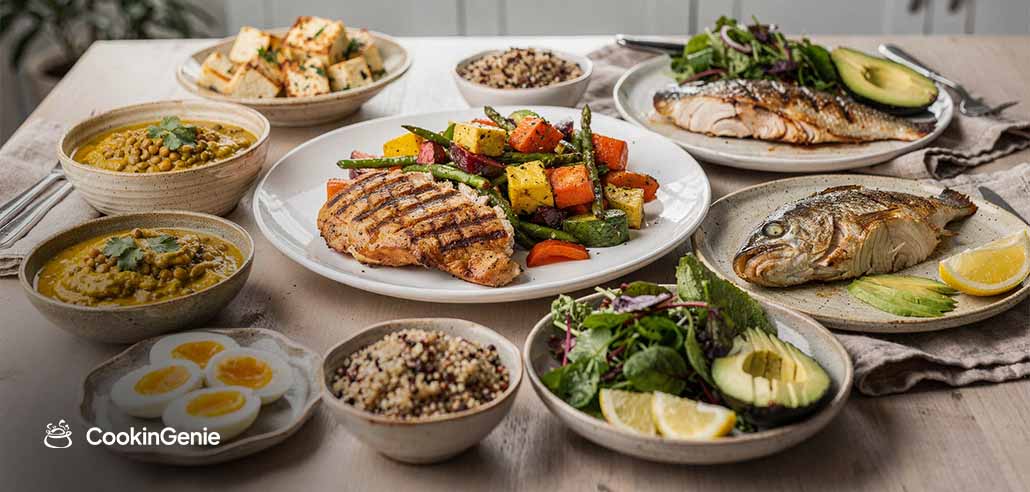

What to Make When Everyone Wants “Something High-Protein
You know that moment when everyone in the house suddenly wants “something high-protein,” and somehow you’re the one who’s supposed to decode what that means?
You open the fridge, see a pack of chicken, some eggs, maybe a lonely block of tofu, and your brain just…logs off. You don’t want another boring salad. You definitely don’t want to spend your whole Sunday chopping and washing dishes. But you do want lunches that keep you full, and not tearing into the snack drawer at 3 p.m.
Smart high-protein meal prep lunch ideas can save your weekdays. And on the days when even that feels like too much, a private chef becomes the real lifesaver.
How Much Protein Do Adults Actually Need?
Before deciding what to cook, it helps to know how much protein the body really needs.
Most health authorities recommend that adults consume around 0.8 grams of protein per kilogram of body weight per day as a baseline requirement.
To put that into perspective:
- A 60 kg (132 lb.) adult needs roughly 48 grams of protein per day
- A 70 kg (154 lb.) adult needs about 56 grams per day
Why Lunch Is Where Protein Makes the Biggest Difference
Dinner usually gets the most attention, but lunch is the meal that determines how the rest of the day feels.
A protein-light lunch often leads to:
- Energy dips by early afternoon
- Difficulty concentrating
- Cravings that show up as snacking
On the other hand, a balanced high-protein meal prep lunch helps keep hunger in check and makes the workday feel far more manageable. It does not need to be heavy or complicated; it just needs to be intentional.
Protein Sources That Work Well for Meal Prep
The biggest mistake people make with protein-focused meal prep is sticking to the same ingredient week after week until even the idea of it feels tiring. Nutrition alone is not enough to keep a routine going. Variety plays an equally important role, especially when you are planning meals meant to last several days.
Chicken continues to be a dependable option because it absorbs marinades and spices easily and fits into a wide range of cuisines. It can be roasted, grilled, shredded, or stir-fried without losing its appeal. Eggs offer similar flexibility. When used in baked dishes, frittatas, or grain bowls, they reheat well and add protein without making the meal feel heavy.
Ground proteins are another practical choice. Turkey and plant-based alternatives cook quickly and adapt well to different seasonings, making it easy to change flavors throughout the week without starting from scratch.
Some protein sources work particularly well for meal prep because they hold up over time and pair easily with other ingredients:
- Chicken is known for its ability to take on different flavors and cooking styles
- Eggs in baked or mixed dishes that reheat without changing texture
- Ground proteins such as turkey, beef, or plant-based crumbles for quick cooking and flexibility
Seafood is often skipped during meal prep, but it does not have to be. Salmon, shrimp, and tuna can all work well when stored correctly and used in simple preparations. They add variety and nutritional depth without complicating the process.
For plant-based households, proteins like tofu, lentils, chickpeas, and tempeh are especially effective. When paired with the right grains and vegetables, they can easily anchor a high-protein meal prep lunch that feels satisfying rather than restrictive. The key is combining textures and flavors so meals stay enjoyable through the entire week.
Stop Thinking in Recipes and Start Thinking in Systems
What makes meal prep sustainable isn’t the perfect recipe. It’s the structure behind it.
When every meal is planned as a standalone dish, prep quickly becomes overwhelming.
Too many steps. Too many decisions. Too many chances to lose momentum halfway through the week. A more effective way to plan a high-protein meal prep lunch is to think in components rather than complete plates.
Start with a few dependable protein bases, add a couple of carbohydrates, and layer in vegetables that can be mixed and matched. Change the seasoning, sauce, or texture, and the same ingredients suddenly feel new. You get variety without doubling your effort, and consistency without boredom.
This shift matters because it removes friction. Cooking takes less time. Decisions become easier. Meals stop feeling repetitive by Wednesday. Most importantly, the system supports your routine instead of competing with it.
When High-Protein Eating Starts Feeling Like Too Much Work
Even the best meal prep intentions come with hidden costs. Grocery lists need planning. Cooking takes time. Dishes pile up. Storage becomes a puzzle. None of these steps is difficult on its own, but together they demand more mental energy than most people expect.
Over time, that effort adds up. Meals get skipped. Takeout becomes the backup plan. Protein goals quietly slide, not because nutrition stopped mattering, but because the process stopped being sustainable.
Understanding Private Chef Cost
The idea of hiring a private chef often sounds indulgent at first. But when you break it down, the private chef cost is not just about the food itself.
It reflects the full scope of work that usually sits on your shoulders:
- Personalized menu planning that fits dietary needs and preferences
- Grocery sourcing and ingredient selection
- Efficient, well-timed preparation
- Hours of time and mental energy saved every week
When compared to repeated takeout orders, unused groceries, and entire weekends spent cooking, the cost of a private chef can be surprisingly practical. For households trying to maintain consistent, protein-focused meals without burning out, it often becomes less about luxury and more about sustainability.
High-Protein Does Not Mean Giving Up Special Meals
Protein-focused eating does not have to stop at weekday lunches. Even hosting can align with health goals when planned well.
A Smarter Way to Stay Consistent with High-Protein Eating
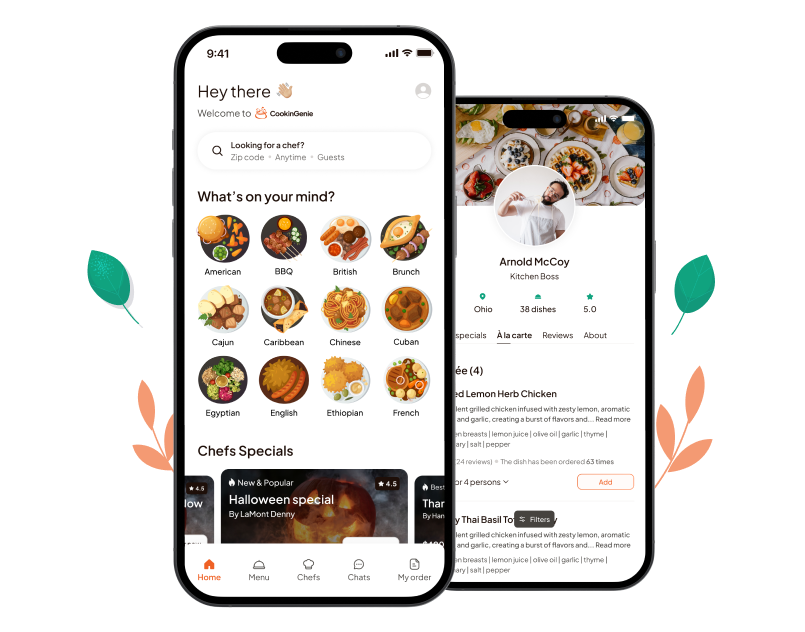
The chefs on CookinGenie plan and cook with your routine in mind. Whether you are trying to maintain a consistent high-protein meal prep lunch, balance different dietary preferences within the same household, or reduce your weekly cooking load, the focus remains on flexibility and practicality rather than rigid meal plans.
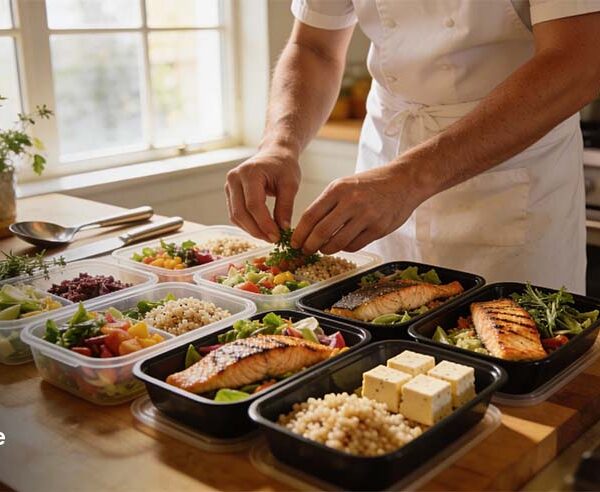
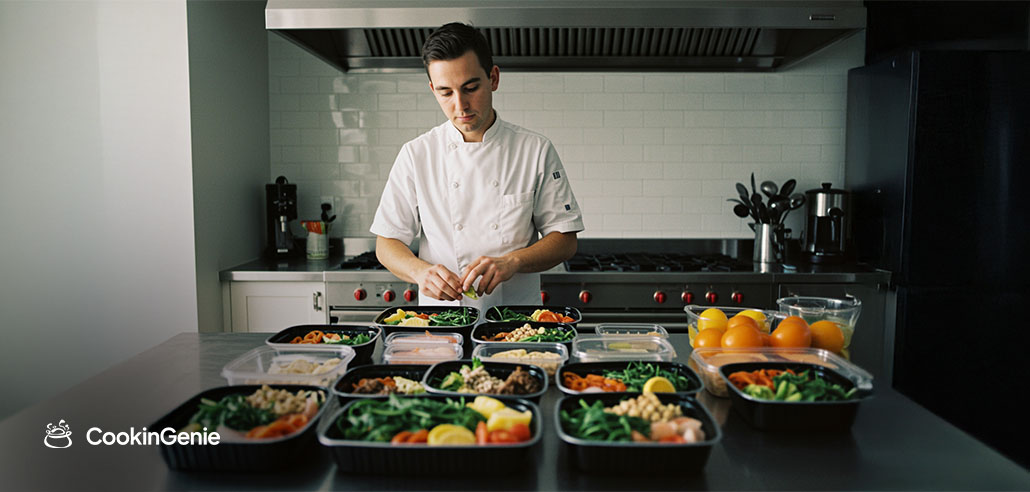
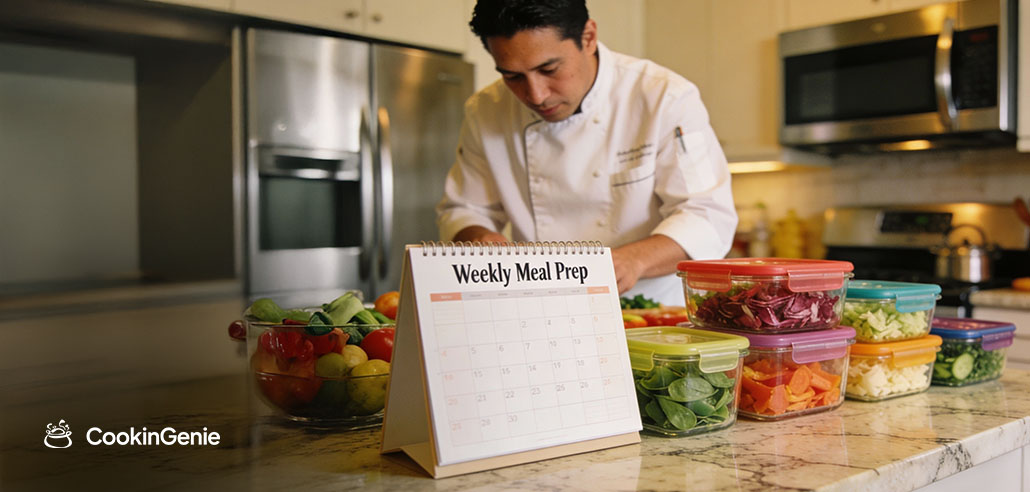
A CookinGenie chef can also handle your weekly meal prep. Meals are portioned for the week, designed to reheat well, and built to stay satisfying beyond the first day. This removes the constant cycle of planning, cooking, and cleaning that often makes high-protein eating feel exhausting.
Instead of repeating the same meals, you get a structured system that adapts to how you actually eat. The result is consistency without burnout, and nutrition that supports your day rather than competing with it.
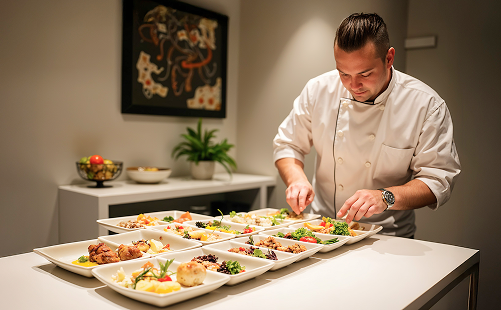
A thoughtfully designed four-course meal can still be balanced and protein-forward. A lighter starter, a well-portioned main, vegetable-rich sides, and a mindful dessert allow you to entertain without abandoning nutrition. Protein does not have to be heavy to be satisfying.
A More Sustainable Way to Eat Well
“Something high-protein” does not need to feel like a vague, stressful demand.
When you understand protein needs, build meals around simple systems, and allow yourself support where needed, healthy eating becomes far more sustainable. A well-planned high-protein meal prep lunch can improve energy, focus, and consistency without taking over your life.
And when you are ready to stop doing it all alone, CookinGenie offers a smarter way to keep your nutrition goals intact while giving your time and mental space back.
If you’re ready to make high-protein eating easier without sacrificing variety or time, explore how CookinGenie can help you plan meals that actually fit your life.
FAQs
Yes. High-protein eating is not limited to meat. Tofu, lentils, chickpeas, beans can all support a high-protein meal prep lunch when portions and combinations are planned properly. Pairing plant proteins with whole grains and vegetables improves both nutrition and satisfaction.
Yes. Many people use a chef specifically for weekly meal prep. A chef can prepare multiple high-protein meal prep lunch options in one session, portion them for the week, and design meals that reheat well. This allows you to eat consistently without spending your weekends cooking.
No. While chefs are often associated with hosting or events, many households use them for everyday support, especially when managing nutrition goals. Over time, the private chef cost can feel more practical than repeated takeout, unused groceries, and lost time.
A private chef does more than prepare meals. They handle menu planning, grocery sourcing, portioning, and timing — all the invisible work that makes eating well feel heavy. When you look at the private chef cost, you are paying for consistency, time saved, and reduced decision fatigue, not just food.




 Home
Home
 Chefs
Chefs
 Chats
Chats
 My Order